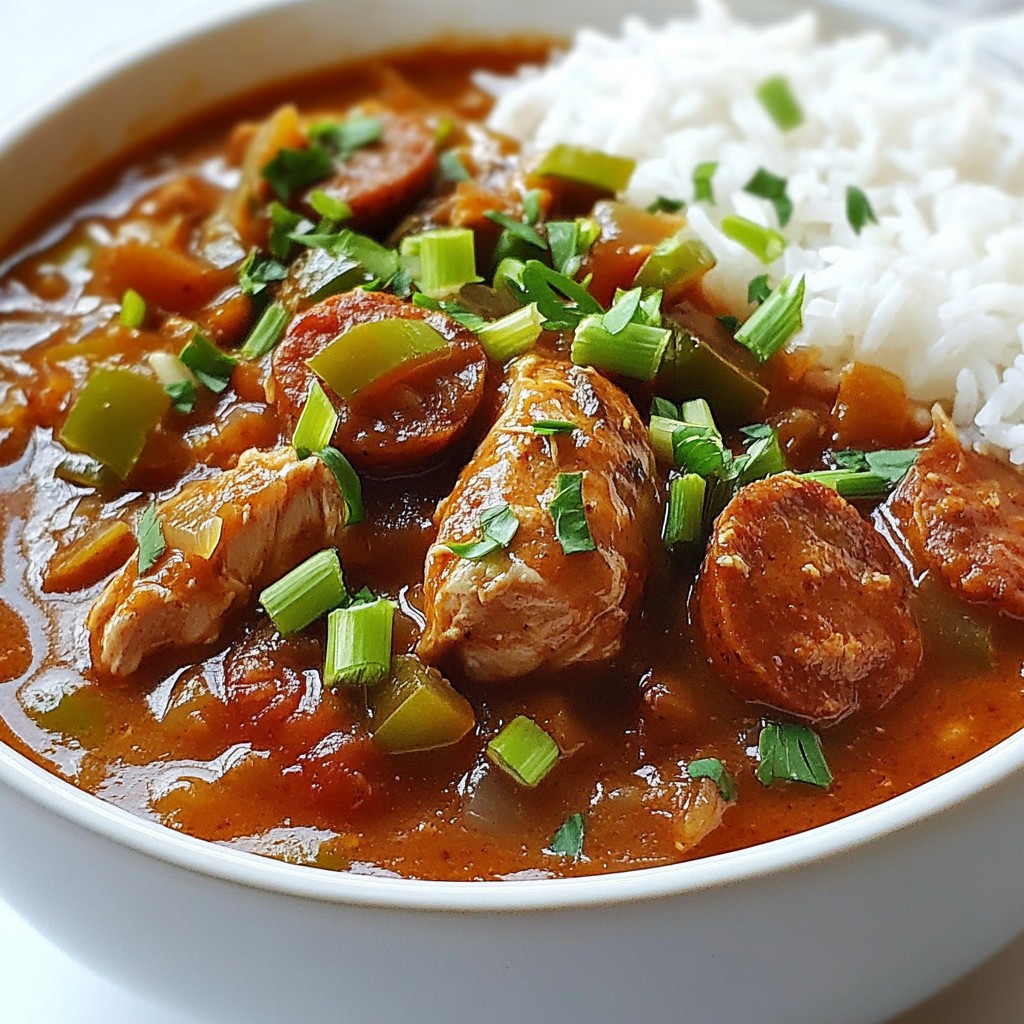
Chicken and Sausage Gumbo is the ultimate comfort food, and I’m excited to share my flavorful recipe with you. This dish is packed with rich spices, tender chicken, and spicy sausage. You’ll learn how to make the perfect roux, build layers of taste, and avoid common mistakes. Get ready to impress your family and friends with a warm bowl of deliciousness that embodies the heart of Louisiana cooking! Let’s dive in!
Why I Love This Recipe
- Bold Flavors: This gumbo combines spicy sausage, tender chicken, and a variety of vegetables, creating a rich and flavorful dish that warms the soul.
- Comfort Food: There's nothing quite like a hearty bowl of gumbo on a chilly day. It’s the perfect comfort food, served over fluffy rice.
- Customizable: You can easily adjust the ingredients to suit your taste, whether you prefer more spice or want to add other vegetables.
- Family-Friendly: This recipe serves six, making it ideal for family dinners or gatherings, where everyone can enjoy a taste of Louisiana.
Ingredients
Main Ingredients for Chicken and Sausage Gumbo
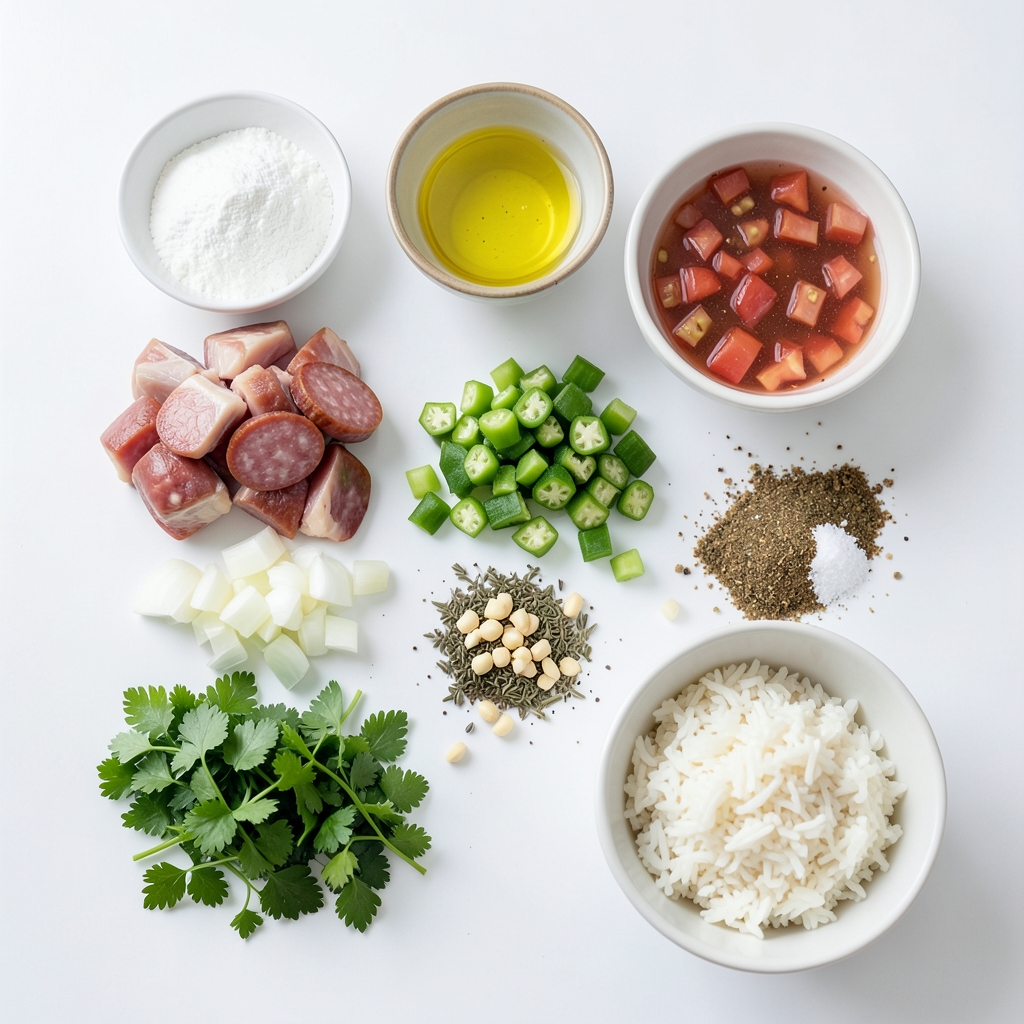
For this tasty gumbo, you will need a few key items:
- Chicken thighs: I use 1 pound of boneless, skinless chicken thighs. They stay juicy and tender.
- Sausage choices: I prefer 1 pound of smoked sausage. Andouille gives a nice kick, while kielbasa adds a smoky flavor.
- Vegetables: The holy trinity is crucial. You’ll need:
- 1 medium onion, diced
- 1 green bell pepper, diced
- 1 celery stalk, diced
- Garlic: 3 cloves, minced, add depth to the dish.
- Okra: 2 cups, sliced, either fresh or frozen, helps thicken the gumbo.
- Tomatoes: Use one 14.5 oz can of diced tomatoes, drained, for a little acidity.
- Chicken broth: 4 cups, low-sodium is best to control salt levels.
Now, let’s talk about the spices:
- Cajun seasoning: 2 teaspoons add that classic Southern flair. You can adjust this to your spice level.
- Dried thyme: 1 teaspoon enhances the overall flavor.
- Bay leaves: 2 leaves provide a subtle aroma.
- Salt and pepper: Use these to taste, ensuring the right balance.
For garnish and serving:
- Green onions: 4 finely chopped for a fresh touch.
- Fresh parsley: Chopped, adds color and brightness.
- White rice: Long grain, cooked, is essential for serving.
With these ingredients, you’re ready to create a delicious bowl of comfort!
Step-by-Step Instructions
Preparing the Roux
The roux is the heart of gumbo. It gives the dish its rich flavor and color. To make it, heat vegetable oil in a heavy pot. Once hot, whisk in flour. Keep stirring for about 15 to 20 minutes. Aim for a deep brown color, like dark chocolate. If it starts to burn, lower the heat. A perfect roux adds depth to your gumbo.
Building the Gumbo
Next, cook the holy trinity: onion, green bell pepper, and celery. Add these to your roux and sauté for about five minutes. This mix brings out great flavors. After that, stir in minced garlic and cook for one more minute. Then, add the chopped chicken thighs and sliced sausage. Cook them for five to seven minutes until browned. This step boosts the gumbo's flavor.
Now, pour in the drained diced tomatoes and chicken broth. Add the sliced okra, Cajun seasoning, dried thyme, and bay leaves. Season with salt and pepper. Mix all the ingredients well.
Final Steps
Bring the mixture to a gentle simmer. Reduce the heat and let it cook for 45 minutes to one hour. Stir occasionally to stop sticking. After this time, taste the gumbo. Adjust the seasoning if needed. Don’t forget to remove the bay leaves before serving.
Serve your gumbo over cooked white rice. Garnish with chopped green onions and parsley. This adds a fresh touch to your meal and makes it even more appealing.
Tips & Tricks
Achieving the Perfect Flavor
To make your gumbo truly shine, adjust the spices and seasonings. Start with the Cajun seasoning. Add more if you like it spicy. If you want it milder, use less. Taste as you go. This lets you find the perfect balance for your palate.
Simmering time is key. Let your gumbo cook low and slow for at least 45 minutes. This allows all the flavors to blend well. A longer simmer can deepen the taste even more. Don't rush this step; great flavor takes time.
Common Mistakes to Avoid
One common mistake is burning the roux. When you make it, stir constantly. If it starts to smoke or smell burnt, lower the heat. A good roux should be a rich brown, like dark chocolate.
Another mistake is overcooking the okra. Add it about 10 minutes before the gumbo is done. This keeps its texture and flavor fresh. If you cook it too long, it can turn mushy. Keep an eye on it for the best results.
Pro Tips
- Perfect the Roux: The key to a great gumbo is a well-made roux. Stir continuously until it reaches a rich, dark chocolate color, being careful not to burn it.
- Use Quality Sausage: For the best flavor, choose high-quality smoked sausage, like andouille or kielbasa, which adds depth to the gumbo.
- Adjust the Spice: Taste as you go! Adjust the Cajun seasoning to your liking, ensuring the gumbo has just the right amount of heat.
- Garnish for Freshness: Don’t skip the garnishes! Chopped green onions and fresh parsley not only add color but also enhance the flavor profile of the dish.
Variations
Alternative Meats and Proteins
You can change up the meats in gumbo. Shrimp or fish adds a tasty twist. They cook fast and soak up flavors well. Just add them toward the end of cooking. This keeps them from getting tough. You can also make a vegetarian or vegan gumbo. Replace the chicken and sausage with beans and tofu. Use vegetable broth instead of chicken broth. You can add more vegetables like bell peppers and carrots. This keeps the dish fresh and colorful.
Regional Variations
Gumbo varies a lot across Louisiana. In New Orleans, you might find a richer, darker gumbo. This style often uses more seafood and spices. In Acadiana, the gumbo can be lighter and have more sausage. Each region has its own special touch.
Creole and Cajun cooking both influence gumbo. Creole gumbo often uses tomatoes, while Cajun gumbo does not. Cajun cooks focus on local ingredients, like okra and spices. They love to use a roux that is dark and rich. Each style brings unique flavors to this classic dish.
Storage Info
How to Store Leftover Gumbo
To keep your gumbo fresh, first let it cool down. Then, place it in an airtight container. You can refrigerate it for up to three days. If you want to store it longer, freeze it in a freezer-safe container. The gumbo will stay good in the freezer for about three months.
When you reheat gumbo, do it slowly. Use a pot on the stove over medium heat. Stir it often to keep it from sticking. You can also add a splash of broth or water to help loosen it up. For the best taste and texture, avoid using the microwave if possible.
Shelf Life Expectations
In the fridge, your gumbo is fresh for three days. After that, it may start to lose flavor. Look for any changes in color or smell. If it smells sour or looks off, it's best to throw it away.
When frozen, gumbo lasts about three months. After that, it can lose taste and texture. Always label your containers with the date you stored them. This will help you keep track of freshness.
FAQs
What is the historical significance of gumbo?
Gumbo has deep roots in Louisiana. It blends many cultures, like African, French, and Spanish. The word "gumbo" comes from the African word for okra, "ki ngombo." This dish started as a simple stew. Early cooks used whatever meats and vegetables they had. Over time, gumbo became a symbol of community and sharing. Each family adds their twist, making it unique. You can find many styles across Louisiana, showing its rich history.
Can I make gumbo in advance?
Yes, you can make gumbo in advance. In fact, letting it sit improves the flavor! The spices and meats blend better when it rests. You can store it in the fridge for up to three days. It also freezes well. Just let it cool before putting it in a container. When ready to eat, thaw it overnight in the fridge. Heat it gently on the stove, stirring often. Your gumbo will taste just as good!
What can I serve with gumbo?
Gumbo pairs well with many side dishes. Here are a few great options:
- Cooked white rice: This is a must for gumbo. It helps soak up the rich broth.
- Cornbread: A sweet side that balances the spice of gumbo.
- Salad: A fresh green salad adds a nice crunch.
- Fried plantains: These add a sweet touch and contrast with the savory gumbo.
- Coleslaw: The coolness of coleslaw complements the heat of the gumbo.
Feel free to mix and match! Each side enhances the gumbo experience.
Chicken and sausage gumbo is a rich and hearty dish. We explored its key ingredients, like meats, vegetables, and spices. Then, we walked through the step-by-step process, highlighting the roux's importance. I shared tips for perfect flavor and common mistakes that can ruin your dish. We also discussed variations, storage, and answered burning questions about gumbo's history.
Gumbo brings warmth and comfort to any table. With practice, you'll make a dish that impresses everyone. Enjoy your cooking journey!